Monday, April 19, 2010

BULLDOG DAYS!

Hey All,

The Blogging Team is taking a hiatus to focus on Bulldog Days. Those of you who are on campus: huzzah! I hope you have fun and explore lots of what Yale has to offer. For those unable to join us, we're still happy to answer any questions you have about the Yale experience- contact us through the boards or private message and we're happy to help with anything.

Hope to meet a bunch of you in person over the next couple of days!

Thursday, April 15, 2010

MemeFactory at Yale

The range of guest speakers and special events I've had the privilege to see while at Yale are astounding, anywhere from children's songwriter Raffi (BANANAPHONE!!!!!) to a sociologist discussing why the popularity of zombie films has increased exponentially since the terror attacks of September 11th. But last night was something that again redefined my expectations: Memefactory, a lecture-parading-as-show about Internet Memes.

Advice Dog gives (sometimes dubious) life advice.

They describe themselves as "Internet Scientists, but only if the word scientist is in quotes, underlined, and with a couple of exclamation points with a 1 on the end." Three guys with five computers spread across three monitors give a rapid-paced show that takes the audience through 3 hours of famous memes and youtube footage crammed into a 90 minute session.

Biologist Richard Dawkins defines as meme as a unit of cultural transmission – in the general sense a meme can be any piece of information which travels between members of culture – the way the internet has co-opted it, however, memes involve funny pictures of cats and people doing silly dances.


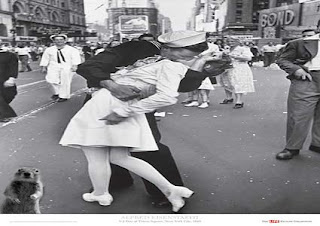
This squirrel made national news for how it had invaded a couple's vacation photo. In something almost akin to social commentary about how something so trivial received such media attention, the internets proceeded to find more inappropriate places for the squirrel to pop up. But moreso than social commentary, they lol'd a lot. Crasher squirrel shows up at...
politically auspicious meetings,
great moments in history,
personal interviews,
and classical artworks of the western canon.

Half of it was pure entertainment- they keep you bouncing between screens with all the absurd mind candy the internet possibly has to offer, narrating it all with a razor-sharp wit juggled between the three performers. But then they also innocuously insert some social commentary in there, discussing how something as anonymous as the website 4chan has created so many broadly recognizable cultural constructs with absolute no traceability to an original creator, how businesses are increasingly capitalizing on this kind of viral trend to advertise themselves cheaply on the internet, and the real social consequences of anonymous and vicious heckling ("trolling") on the internet.

Memefactory / NYU Geddan / Get Down from Mike Rugnetta on Vimeo.


Check out a full-recording of one their live performances at NYU!

But at the same time, they don't take their work as self-proclaimed INTERNET "SCIENTISTS"!!1! too seriously, acknowledging that their job is to spend a lot of time perusing meaningless gibberish on the internet. I especially appreciated this kind of guest speaker as a break from the weightiness of academics- still learning cool stuff, but all for the lulz.

Now play me off, keyboard cat.

Thursday, April 1, 2010

What'd you do today, Elliot? Oh, y'know. Just conducted my band on national television. The usual.

The Yale Men's Hockey team had an incredible season, and I got the chance to follow them every step of the way as Drum Major of the Yale Precision Marching Band. Though as a marching band our primary focus is on football season in the fall, we keep playing Pep Band style at sporting events throughout the spring, with Hockey as one of the favorites.

Yale Hockey is poetry. Brutal, violent poetry that slams people into glass walls.

So clearly, the only appropriate way to conduct a band at such an event is with an enormous battle axe.

But the whole experience of a home game with the hockey team and YPMB becomes so much more than that. We pump up the crowds to a fever pitch with our music, anything from Lady Gaga's Bad Romance to an amplified electric guitar solo backed up by an enormous brass band in our version of Smells Like Teen Spirit. Between songs, we keep the crowd going by leading enormous cheers ("You have knives on your feet... USE THEM!!") Words can't convey the level of adrenaline at these events.

Bangin', blowin', generally rocking out.

The band played at all the hockey home games this season and got funded by the Athletics Department to travel with the team to Worcester, Mass, to cheer on the team as they attempted to make history in the NCAA Playoffs. The team spent most of the season ranked around #5 nationally, and came out on top of the East Coast Athletic Conference Hockey League, scoring them a spot in the NCAA Playoffs.

We were a single game off from making the Frozen Four, but even going that far was an incredible experience. Sports aside for one moment, there's nothing quite like conducting your band in an arena nearly filling its 15,000 seat capacity, broadcast live over ESPN. My phone wouldn't stop buzzing with texts from friends on campus, relatives, people from home, gushing about how loud and powerful the band sounded on national TV.

Our hockey team had a particular penchant for extraordinary comebacks in the last second- my favorite example was the Senior Day game against Clarkson. After spending most of the game down 1-4, the Bulldogs had an unbelievable surge by scoring 3 goals in 51 seconds to force overtime and ultimately win 5-4. This video by Yale Athletics captures some of the absurdity of that game-- especially look out for the clip around 2:32-2:39, where Broc Little gets gleefully crushed in celebratory hugs by his entire team after his third goal in less than a minute tied it up.

(Although, musicians may notice that they edited the footage a bit; what I'm conducting doesn't match up with the band's sound at all.)


Look out for the YPMB over Bulldog Days- we'll be playing at a ton of events, so you'll actually have a hard time not seeing us. I'll be out there in front conducting the band as we fill your lives with musical awesomeness.

Wednesday, March 31, 2010

LOST, and what it has to say about the Ivy League

Disclaimer: I'm going to talk about LOST, but I swear, this is spoiler free and doesn't require any familiarity with LOST. I'm gonna run on a bit of a tangent, though, so read it through all the way before you draw any conclusions.

I don't watch much TV in general, but LOST is one of the few shows I get really into. But because I have a sweet seminar on Postwar Japanese Culture that meets every Tuesday night the same time as the show airs, I watch it online later (thank god for Hulu.com, the best friend of college students everywhere). Add in traveling to China for service work over spring break and now I'm a couple weeks behind on the show.

But last night, chillin' in my common room with a couple of buddies gathered round the laptop, I was surprised to see in the episode "Dr. Linus", Yale pops up in in an alternate reality flashforward back in the real world(?). Alex, now a talented and driven senior in high school, is studying for her AP European History test and applying to Yale. Alex feels she needs a recommendation from the (secretly evil) Principal Reynolds, a Yale alumnus, to stand a chance; Principal Reynolds wields this power to manipulate Dr. Benjamin Linus. Ben has to sacrifice his own ambitions to make Principal Reynolds give her the magical recommendation from a powerful alum to get her into the Ivy Leagues--once Ben gives in and the evil Yalie writes her a recommendation letter, her future is secured.


My reaction: "Hey wait... LOST is saying that Yale is evil?"

At first I resented the factual inaccuracies: a recommendation from Dr. Linus (who knew Alex well) would have been better than the letter from the evil principal (who was an alum but didn't know her), I'm pretty sure Yale is NOT evil, etc. But with a little more thought, its easy to see why the producers of the show would use the buzzword "Yale" as a way to quickly invoke a characterization of the Ivy League that some people hold: old money, powerful, snooty, elitist.

It raises the interesting question of what the words "Ivy League" means to different people, a question that you'll probably come to face anytime somebody asks where you go to school.

I come from Spokane, WA, a place where only a handful of students consider going to the East Coast for school and fewer still would dream of "Ivy League". When you return home from break as a college student, the questions about your college inevitably elicit a lot of reactions. There's certainly praise and admiration from family friends and neighbors, but the people who don't know me and form snap judgments from my status as a Yalie (running into that guy I used to debate in high school, or the man fixing my chain at the bicycle shop on 29th avenue) might associate me with that Ivy League stereotype.

"He probably thinks he's way too good for us."
"Bet he's loaded."

I personally don't put a lot of stock into the connotations that Ivy League carries. All it actually designates is an old football league among some of the nation's oldest schools. It's grown from that to imply the top-tier of academics and selectivity in admissions, which is largely true, but I feel like absolute rankings are kind of silly. If you put Yale next to University of New Haven, the name Yale would obviously carry more weight in recognition and that sense of shock n' awe, but UNH has the top forensic science program in the nation. These things are relative.

The point being: I like Yale not because of the weight the name carries to other people, but because of my own personal experience (that is, of course, far more than I can cram into this already verbose post). My suite includes me (a guy who worked hard at public school and receives a bunch of financial aid to come here), and a guy who traces his family back through 3 generations of Yale Men, living in a double with a first-generation American / college student. We're all best friends, and those indicators of status bear no relevance to our relationship. Trying to put too much stock in the Ivy League label to judge the character of the people you meet here is just silly.

But at the end of the day, it's tough to give this long-winded explanation to someone I encounter briefly who asks about my school. There are definitely times I brush off the question by evasively replying "a liberal arts school in Connecticut", and sometimes I just have to accept that people's elitist expectation of Ivy League will differ from what I know as my time here and my own values. And along with that, I have to accept that as much as I love LOST and its smoke monster polar bears eating psychics on a tropical island, not everything in the show is real. :D

Welcome to Yale!

Congratulations! After months of waiting the day has finally come - the Bulldogs singing when you saw the online decision, and that thick letter from Yale on its way to your doorstep. Take a deep breath and enjoy yourself!

I'm excited to welcome in the upcoming Yale Class of 2014. You've probably read all the admissions materials and have at least some idea of why this is such a great place to be, but reading a pamphlet can't compare to the real experience. These blogs are the voices of Yalies telling you a little bit about our own adventures. So read through these, hit us up with your questions, and don't miss out on visiting campus for yourself over Bulldog Days!

Friday, March 5, 2010

My bulldog homies on the beach

Have a rocking spring break, yo! Your academic calendars may or may not line up with ours, but the Bulldog Blogging team is taking two weeks off to frolic, change the world, bask in the sunshine, get that level 100 charizard, focus on senior projects, apply for fellowships, and chill out at home. Don't expect regular updates from us for the next two weeks, but soon we'll kick it up into high gear - April 1st marks the date of Regular Decisions going live, so you'll see a whole lot of activity on the site soon!

Spring Break

Spring break! Cancun! Take off your shirt! wooOOOooOOOo!


Or that's what some people would say. This afternoon marks the start of Spring Break for most Yalies, heading off to adventures of all kinds all around the world. Instead of debauchery on the beach, though, I'm going on a Reach Out Trip trip to Beijing, China.

The spring break and summer service-learning Reach Out trips provide a unique means for integrating academic learning about international development issues with first-hand experience in developing countries. These trips facilitate hands-on participation with organizations abroad attempting to combat the problems faced by people in the developing world, including poverty, environmental degradation, inadequate health care and education services and others.

According to the National Bureau of Statistics' Studies on Chinese Migrant Quality of Life, 49.2% of migrant parents who brought children with them to the cities "had to pay an average registration fee of 1,226 yuan in addition to regular tuition fees." These fees are usually required by urban public schools that accept non-residents. Since rural migrant workers do not have a Beijing hu kou (户口), they are asked to pay fees that they cannot afford. In addition to educational costs, migrant children also face severe discrimination once they enter a Beijing city school. The discomfort that arises from this discrimination, as well as from the difference in income, influences the parents' decision to send their children into the city's school system.

As a result, migrant workers usually send their children to local migrant schools. However, migrant schools are often primitive and lack the resources city school systems have. Poor salaries, nonexistent work benefits and grim career prospects make it difficult for migrant schools to hire and maintain qualified teachers.

My group is volunteering in conjunction with a group from Peking University in Beijing to teach at a migrant school and raise money for their academic supplies. We're both leading simple lectures that we can handle ourselves as non-Chinese speakers (science demos, English tutorials, etc) and leading more in-depth discussions with the translation help of our Peking University partners.

So, it's an adventure--I speak no Chinese and have little idea of what to really expect. It's funny to think that this is supposedly within my realm of expertise (East Asian Studies) but still so far out of my actual body of Japan-centric knowledge.

I'll update you all with how the trip turns out when I get back - here's hoping my intestines survive street vendors. :D

P.S. I'm keeping my fingers crossed that as soon as I get back Stateside I'll be headed to Albany, NY, where the men's hockey team may have progressed to the national play-offs after dominating the ECACHL this season. I'll be conducting the YPMB to cheer them to victory. WAY PUMPED.

Friday, January 8, 2010

Finding a Major

Some people are born knowing what they want to do with their lives. I was lucky enough to not. When I was little, I once confessed through sleep-talk the irrefutable fact that “I want to be a pickle”, and my parents have never let me forget it. While these days my aspirations and goals are (thankfully) a bit loftier, even so, it took me a long time to settle on a major at college.

I'm here to tell you: “Undecided” is okay.
The Yale College Programs of Study publication, or as we call it, the Bluebook, can be your greatest friend and diversion for the next four years, but it can also scare the living bejeezus out of you. When I first cracked mine, within minutes I had dogeared dozens of pages from totally disparate departments before realizing with a bit of sinking dread, “I have to cut this down to four or five”.

Most of those classes that first jumped out at me had little to do with my supposed plan when I matriculated at Yale: double-majoring in Chemical Engineering and Theatre Studies (I still laugh a little bit when I see that, but I know of at least one graduate who did exactly that.) But shopping period allowed me to try out tons of long-shot, “that might be cool” kinds of classes, and every time I saw something shiny I chased it.

To sum up ever so briefly my major course:
~started at Chemical Engineering / Theatre Studies (My original plan was to save the bananas from the viral epidemic threatening to kill them within 10 years, and I also love to perform)
~took awesome ear training and accompaniment classes that made me consider a major in Music
~but my intro psych class was so cool! Definitely Psychology.
~but then I discovered Insect EvoDevo, swore to study genetic mechanisms of butterfly eyespot development in Ecological and Evolutionary Biology
~how can I combine psychology and biology? Eureka! Behavioral Neuroscience!
~I'm secretly a granola-crunching tree-hugger hippie: switch to Environmental Studies
~except I used to love student congress debate in high school... how about Political Science?
~No, I just read this awesome book on the sigatoka banana virus in Ecuador and I should study its cultural impact through History. (Full circle to the banana epidemic!)
~And after I weaseled all over the mulberry bush, I pulled a complete 180 and settled on East Asian Studies (Japanese) the fall of my junior year. And I love it.

Though I put a lot of effort into things that ultimately have no relevance to my current major, the knowledge and experience gained in this huge range of fields were not wasted. My stint considering myself a music major gave me a strong background to arrange classic 80s rock for the Yale Precision Marching Band, and when I was part of the Evolutionary and Ecological Biology department I went on a fully funded spring break trip to Ecuador with my lab to conduct ornithological field research. And I learned cool things everywhere.

Even now that my academic load is much more focused onto topics pertaining to Japan, I still make a point to keep one class free for unexpected exploration. This fall, I took a class on US Gay & Lesbian History. The professor, George Chauncey, is among the pioneers of the newly emerging field of gay history; it's cool when almost every assigned reading for class continually cites the professor, and you start to realize it's not because the professor narcissistically assigns his favorites but because he's kind of a big deal. The class gave me a new perspective to examine how minorities are able to mobilize politically to protect their civil rights, a topic I'm hoping to incorporate into original field research in Japan this summer for my eventual senior thesis.

While some majors, particularly science and engineering, might not be so flexible that you can jump in Junior year, a huge number are. Even if you think you have your whole life mapped out, stay open to try a subject you've never considered before. I'm glad I did.

Sunday, December 27, 2009

Service at the Cathedral of Knowledge

One of the questions I get the most about Yale is “how hard are the classes?” That's always a tough one to answer, because that assumes there's a “standard” or “average” class. Instead of trying to give a vague, all-encompassing answer, instead I'd like to show you how I keep up with one particular class.

This is Sterling Memorial Library, sometimes jokingly referred to as A Cathedral of Knowledge (the architect really wanted to build a church instead).

Now zoom in to my personal fortress.


This is where I did most of my work for a graduate seminar I took this fall, JAPN 559: Reading, Literature, and the Humanities (possibly the most vague title ever) that focuses on translating some pretty advanced short stories, poems, and literary critiques from Japanese to English.

Since it's a class on reading literature, the range of vocabulary and imagery is way broader than would be used anywhere else. That means it's suddenly a lot harder. But with the right sources, I've been able to get through some incredibly tough translations. Let's break down my collection of toys-

At the most basic level, I use an English-based online dictionary of standard vocabulary (jisho.org) and a Japanese-based dictionary that includes more contemporary and casual definitions (alc.co/jp).

I also use a Japanese game for the Nintendo DS that functions as a dictionary where I can write in characters using the touch screen. I got the software shipped from Japan for $50- equivalent standalone touch-screen dictionaries cost more like $300.

When those fail, I resort to two character dictionaries: Koujien gives the most comprehensive definitions once I know how to pronounce a word, but usually I have to start at a kanji dictionary to look up an unfamiliar character by radical and stroke count. These are the end-all be-all of Japanese definitions in Japanese, so with enough labor I can define anything.

Now I can read words. That's a start. Beyond that, I keep a grammar dictionary on hand for things that confuse me. But the funny thing about literature is that it likes to reference other literature, and history, and names and myths and all those silly things that look like words but don't show up in a standard dictionary.

For that, I keep a Japanese literary encyclopedia on hand, as well as an open link to the huge database collection of Yale's East Asia Library. It encompasses periodicals, dictionaries, encyclopedias, photo archives, and more, coming from both original japanese sources and English scholarly collections. This is especially useful considering Wikipedia once led me to mistake Maeda Ai, the most influential literary critic of the 20th century, for Maeda Ai, the voice actress best known for playing Mimi in Digimon. Oops.

Even with all these sources, the class is tough. I thought I had prepared the assignment Arigatau thoroughly for class, thinking it was a nice little short story about a polite car driver appreciating the finer moments of the season's beauty while he drove a mother and daughter to a far-off city. But since it was written in the 1920's, it included a number of now obsolete ways of writing common words. So when I didn't recognize 賣る really meant 売る, I missed the crux that turned the story into a struggle about selling the daughter into prostitution. Oops.

Put together, I can spend an hour or more trying to fully comprehend a single page of text-- thankfully, assignments for the class are short. The challenge comes not because the class takes the most hours but because I have to take every sentence so critically, not just plowing through it linearly. Instead, I have to constantly re-examining the meaning of what I'm reading through a ton of angles. Its hard, and I love it.

Monday, December 14, 2009

Congratulations, 2014!

It's December 15th. There were a lot of people anxiously hitting refresh on their browsers all day, waiting for the admissions decision to go live on the internet. Now, Josh and I want to be among the first to congratulate all our awesome new admits for 2014.


See how excited Elliot is to eat that yam?
He's even more excited for the class of 2014. So excited there's fireworks!


Josh will offer you all congratulatory high fives, too.

We're heading up this blogging initiative, leading a team of awesome Yalies to try to share with you a taste of our personal experiences at Yale. We'll all be putting up new posts regularly, so be sure to check in often! We're here for you and to answer your questions, and we want to tailor this website to what YOU want, so drop us a comment here or a private message if there's something you want to see our blogging team writing about.

But for now, have fun with the site, meet your incredible future classmates, and have great winter breaks!

Yours in Lux and Veritas,
Elliot and Josh

Portrait of the Artist as a Young Dinosaur

As the son of an art teacher, I feel like I might be betraying my genes: I can't draw to save my life. Yet this hasn't stopped me from plunging into the underground art scene at Yale- I hosted an unofficial exhibit last year and was just legitimized by the inclusion of my work into a college-wide gallery.

Let's back up: the basement of Jonathan Edwards, my residential college, has a long hallway reserved as gallery space. Previously, it was filled with professional museum quality prints from all over the world, with exhibits changing every month or so. But there was a period my sophomore year where the exchange between exhibits took too long, leaving nothing but bleak white walls. And that's just boring.

So, enterprising young artist that I am, I gathered my resources (The "MIGHTY DINOS" coloring book and crayola crayons, a gift from my older sister) and invited everyone I knew to come color a dinosaur. I then surreptitiously put the dinosaurs up all over the gallery. What it lacked in artistic pedigree, it made up for in awesome, bringing together the creative energies of a ton of friends and filling the space with color (and DINOS). I couldn't help smiling every time I heard the buzz about the mysterious dinosaurs that had proliferated overnight.

They eventually took my dinosaurs down once they replaced it with a real exhibit, and a great sadness fell across the land.
But this year, the student curators of the gallery sent out a call for all JE artists to submit their work for a new gallery called “KIDS: The Art of Growing Up”, loosely interpreting the themes of childhood, youth, and families through any medium. With funding from JE, I expanded the original “wax and fibrous pulp medium” works into enormous laser-printed glossy posters, with even brighter colors than before.

So amid sketches and photographs created by actually talented people, my dinosaurs debuted at a grand catered reception one Friday Night. Critics have received my work warmly, praising my “ability to stay mostly within the lines surpassing that of even the best second graders”.

I try not to take myself too seriously, so even when I'm supposedly working hard, it's nice to have the chance to take a chill break with some color crayons and dinos.

Thursday, December 10, 2009

Birds Gone Wild : Spring Break in Ecuador

Since taking office, two of University President Richard C. Levin's goals have been to expand funding and research opportunities for the sciences and to increase the number of international opportunities and connections for undergraduates. In a stroke of brilliance, the two were combined to create my spring break, where my ornithology lab got full funding to go on a birding trip in Ecuador, applying everything we had learned about behavior and taxonomy in the classroom to actual field study.

One of my favorite birds from the trip, ensifera ensifera, the sword-billed hummingbird.

This post may be a long one, because I have a lot of cool bird pictures to share, but it's worth it!

The trip was a pretty small group, consisting of the 12 people in the lab, the grad student TA, our professor, and his birding colleague, the director of inverterbrate collections at the Peabody Museum of natural sciences. I didn't know most of them too well before the trip, but now we're all really close. The professor is no longer "Professor Prum"- just Rick.
Our total for the two week trip ran to 455 unique bird species identified- for someone like me with no birding experience, it was an intense crash course. (In this picture above, I like to imagine Dan is about to throw out his pokeball and say "Oscillated Tapaculos, I choose you!")

We saw birds that still hold a legendary status among the birdwatching community, like the Tanager Finch, an unclassified bird that hasn't been spotted in 50 years. Above is the incredibly rare Giant Antpitta- this individual was known as Maria, and with the help of some native guides we got within feet of her.
I had always imagined birdwatching as something that bored old people did as a hobby, until I tried it myself. Serious birders are perfectly happy to get up before the crack of dawn for the early birds, hike all day in search of diurnal birds, stay out late for the nocturnal ones, and get up the next morning driven to do it all again. My professor, the most intense birdwatcher of all, is honestly an inspiration- if I can ever find nearly that degree of passion for anything that could compare to what he holds for birds, I will count myself a successful man.

As we drove up, down, over, across, and through the Andes in the nonstop quest for birds, we encountered some pretty epic conditions. We dealt with landslides, roads washing out beneath rivers, and even fallen boulders blocking the road. In a rampant display of manliness, a few other guys and I pushed the boulders off the road. Rarely has driving been such an adventure.

On our second day of exploring the western slopes of the Andes around Mindo, we spelunked an oilbird cave. It was literally a crevasse torn deep into the earth, and we had to traverse slime-covered ladders and waterfalls in our descent.

The ladder actually went right through the waterfall- we got soaked!

But for all the effort, we found nesting steatornithidae, one of the most ecologically unique birds out there. They use echolocation to navigate within the caves at night, and eat only avocado and palm oil. In fact, they're so oily that Quichoa natives in the area traditionally ground up the birds for cooking oil and candle making.

I have a long history of climbing statues that I'm probably not supposed to- so when I found this oversized statue of the Andean Cock-of-the-Rock, I couldn't resist climbing to the top. We all had to notice, though, that the coloration here isn't true to the real bird. I was absolutely ruined when I tried to buy souvenirs, because most of the bird-themed trinkets weren't real species and I couldn't bear to buy any that weren't biologically accurate. :p

On our last day in Mindo, we went to a restaurant with an array of nectar and fruit feeders right outside the glass windows. We had the chance to watch tanagers battle for banana supremacy while we supped on pallanchingos.

On our first trek to the East of the Andes, we hopped a half hour flight from Quito to Coca. From there, we boated along the Rio Napo, one of the major tributaries to the Amazon. I played the computer game Amazon Trail as a little kid, but never imagined I'd actually be there- it still blows my mind.


We got into still smaller canoes for the last leg of the river to Sani Lodge, part of the reservation for the Quichoa natives who now run eco-tourism ventures, because the water level was so slow. I spent this boat ride with just me, the guides, and my professor on the one boat- my bird count went WAY up for spending some time with the guy, and I learned a ton about the incredible research he's now doing with soft matter and light defraction in the structural colors of feathers.

The view from outside Sani Lodge, along the river.


The latter half of the trip was mostly in the Amazon lowland basin- here we started climbing an observation tower built into an enormous queypac tree.

My camera couldn't begin to handle the scale, but the tree went over 150 feet straight up! I tried my hardest to ignore the presence of a termite nest living at the top.

Look closely- that's not just a dead stump. It's a potoo! This family of birds has the adaptation of looking and behaving exactly like a dead tree (AKA not moving all day) to avoid predation.


The rainforest definitely isn't the stereotypical college spring break, but we still stayed at some pretty swanky resorts in between long bouts of birdwatching- all on Yale's dime. Relaxing in the tropics is great- we even went swimming in a cayman-infested lagoon near this lodge, and somehow lived to tell the tale.

Again, not the typical spring break. Instead of wet t-shirt contests, we had wet poncho contests when we got caught in tropical storms.


Even though the focus of the trip was on birds, traveling with such brilliant minds I picked up a lot about rainforest biology of all kinds. Here, we took a quick break from searching for Pointtail Palmcreepers for Rick to explain how the strangler fig had grown up around and finally dragged this other tree down.


Ecuador is about the size of Connecticut, but for its size its one of the most biodiverse places in the world. You can get a sense of it by the huge variety of terrains here, from mountainous cloud forests to lowland rainforests to barren rocky lakes far from civilization, all in search of more birds.

I couldn't believe that there'd still be birds on the highest peaks of the Andes, but we braved the elements in search of those rare ducks and hummingbirds crazy enough to make the moss and fungus covered summits their home.


Our resort up in the Andean slopes around Papallachta had hot springs heated by volcanoes. Let me tell you, this was HEAVEN. This makes up for all the sweat and grime and bugbites you could possibly accumulate in two weeks of trekking the wild.


This is just a silly picture I had to share- some of the snack bars we ate looked exactly like packed bird seed. Here, I do my best impression of a parrot swooping in.
Speaking of parrots swooping, we visited a parrot lick, which is a mine into a hillside naturally formed by foraging parrots. They eat a lot of seeds, so to deal with the all the natural plant toxins that build up in their diet they eat clay right out of the ground that neutralizes the poisons.
I like to imagine the mealy amazon parrots here are telling themselves NOM NOM NOM as they chew up this rock.
Look at him go- Rick is always on the lookout, and it's infectious. Back in New Haven now, I can't stop identifying the latin names and behaviors of the birds I see.

We discussed a lot about different behaviors and adaptations to ecological niches- this glossy tanager actually puts his entire lower jaw inside the feeder intended for hovering hummingbirds.


And for your viewing pleasure, a few more hummingbirds- we saw 56 different species in Ecuador. You could actually consider this a little low considering there were more than 150 in the country to be found. Above is the male racquet-tail. A bandy winged puffleg: they're never still! Also, some birds have very silly sounding names.

A violet trainbearer (left) and the pteryian bronzewing (right).
Not a hummingbird- just a really scary looking spider.
The sapphirewing. Even with the high end photo equipment brought for the trip, hummingbirds are so hard to capture on film. They never stop moving!


Early in the trip, when I looked across the slopes and saw the shape of an enormous Y formed by the growth patterns of trees, I knew it was a good omen. This was the adventure of a lifetime, exploring such a remote and wild part of the world while learning an absurd amount of ornithology. To the unitiated, I probably seem a little bizarre now for the kind of glee with which I'll point out any bird on the street, but I love it. I have the seen the light, and now I know: birds are awesome.